
Composite aircraft structures are designed to be lightweight, strong, and durable. But when damage occurs, determining how to repair it is not always straightforward.
For some damage, the Structural Repair Manual, or SRM, provides clear guidance on how the repair should be performed. However, there are situations where the damage falls outside those established limits. When that happens, the repair process requires additional evaluation, engineering, and approved repair data.
Understanding what happens next can help aircraft owners, operators, and maintenance professionals make informed decisions and better prepare for the repair process.
1. The First Step Is Defining the Damage
Before a repair plan can be developed, the full extent of the damage must be understood.
Composite damage can take many forms, including impact damage, delamination, core crush, disbond, and thermal damage. Some of these issues are visible during an initial inspection, while others may exist beneath the surface.
Straight Flight uses visual inspection along with methods such as ultrasonic inspection or tap testing to help define the damaged area and determine the appropriate repair scope.
A thorough assessment is critical because the visible damage does not always tell the complete story.
2. Not Every Repair Is Covered by the SRM
The SRM provides approved repair guidance for many types of damage. When a repair falls within those established limits, the process can move forward using the available approved data.
But what happens when the damage exceeds those limits?
In these situations, additional support may be required to develop an approved repair solution. Straight Flight works with composite Designated Engineering Representatives and aircraft OEMs to help establish cost-effective approved repair data when standard guidance is not available.
This creates a path forward for damage that might otherwise result in longer downtime or unnecessary component replacement.
3. Composite Repairs Require Controlled Processes
Once the repair path is established, execution requires careful control at every stage.
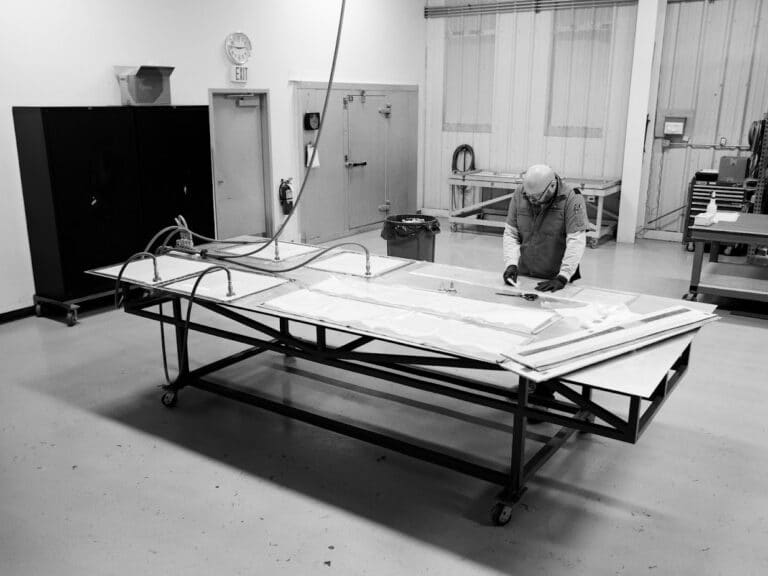
Depending on the damage and repair requirements, the process may involve ply-by-ply material removal, contamination control, prepreg or wet layup, vacuum bagging, localized curing, core replacement, potting, closeouts, and cure monitoring.
These processes are designed to restore the damaged area while maintaining the structural requirements of the component.
Composite repair is not a one-size-fits-all process. Material selection, repair geometry, curing requirements, and inspection procedures all play a role in the final outcome.
4. Validation Is Just as Important as the Repair
Completing the repair is not the final step.
Post-repair inspection and validation help confirm that the component meets the necessary requirements before it can return to service. Depending on the repair, this may include NDT, dimensional or surface verification, cure records, material traceability, and process documentation.
Proper documentation also supports the airworthiness release process and provides a clear record of the work performed.
5. One Coordinated Repair Process Can Reduce Downtime
Complex composite repairs often involve multiple specialties. Engineering, inspection, structural repair, documentation, and finishing all need to work together.
Straight Flight brings these capabilities into one coordinated process, helping reduce the number of handoffs required throughout the repair.
Components can also receive paint, coatings, or protective finishes before being returned, allowing them to arrive ready for installation rather than requiring an additional refinishing stop.
This streamlined approach can help operators better manage repair schedules and get aircraft back into service efficiently.
Final Thoughts
Composite damage that falls outside standard repair guidance does not necessarily mean a component needs to be replaced.
With the right damage assessment, engineering support, approved repair data, controlled execution, and validation, many complex composite repairs can move forward through a clearly defined repair path.
At Straight Flight, our composite capabilities combine engineering, NDT, structural repair, manufacturing, and finishing to provide coordinated support from initial assessment through return to service.
Whether you need help with a damaged composite component, structural repair, prototype fabrication, or repeat production, our team is ready to help.
📞 (877)-300-9164 | 🌐 straightflight.com